

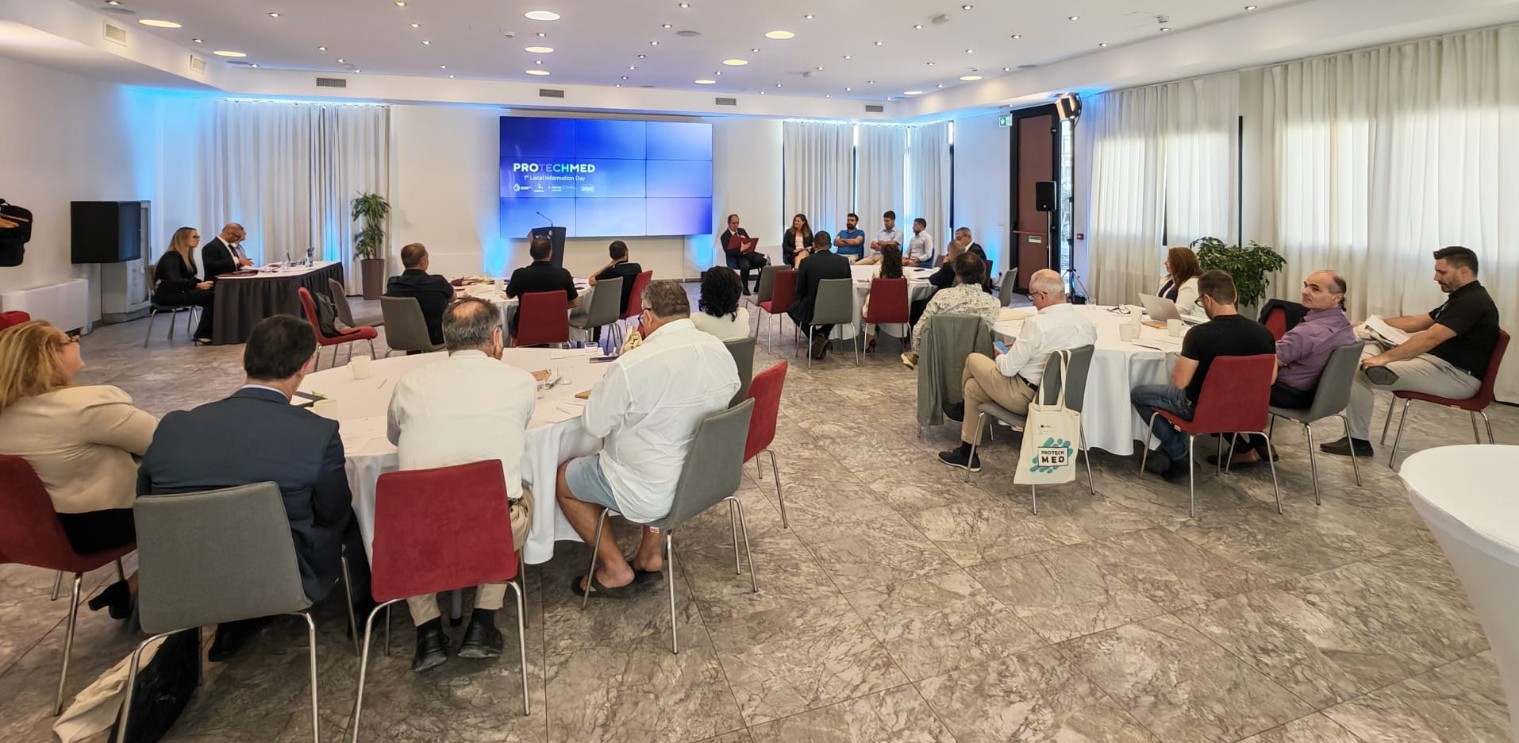
In a territory like Malta, where space is a highly limited resource, the primary sector faces a critical challenge: how to innovate and boost agricultural production while maximizing existing infrastructure? Concrete answers to this crucial question were addressed during the first Local Info-Day of the PROTECHMED project, a major institutional and technical forum attended by Keith Azzopardi Tanti, Parliamentary Secretary for European Funds, alongside government officials, academics, research institutes, and agro-industry stakeholders. The objective of the meeting was clear: to determine how technological innovation can support the Maltese greenhouse sector in remaining environmentally sustainable and economically viable, offering actionable solutions to challenges such as climate change, water scarcity, and rising operational costs.
During the proceedings, official data on the island’s greenhouse farming reality were presented: tomato, zucchini, and strawberry crops account for a combined 51.7 hectares, representing 68.3% of the total national greenhouse area (75.7 hectares). Production is heavily concentrated in the Northern and Western districts, covering 54.7 hectares (72.3%), while the Gozo and Comino region accounts for 12.8 hectares. The framework outlined in the 2026 White Paper highlights complex structural headwinds: climate variability, surging production costs, labor shortages, and demographic pressures. The strategic response focuses on supporting growers with targeted technical enhancements, strengthening their technical capabilities, and ensuring long-term business continuity.
A Four-Pillar Integrated Approach
The discussion approached greenhouse agriculture from four complementary angles: Agricultural Education, delivered through the MCAST University Department of Agriculture; Applied Research, coordinated by the Ministry of Agriculture (MAFF) Research Directorate; On-Site Demonstration, driven by the SVI.MED. Euro-Mediterranean Center in Sicily; Private Sector Innovation. A key contribution came from Manuel Sapiano, Chief Officer of Riżorsi Agrikoli Malta (the national agency responsible for managing and protecting agricultural land resources), who presented data on Maltese greenhouse farming, emphasizing growth opportunities and the essential role of innovation in securing the future of local farms.
The Role and Opportunities of the PROTECHMED Project
Special focus was placed on the PROTECHMED initiative, presented by Emilia Arrabito, Director of SVI.MED. This cross-border cooperation project aims to guide Maltese agriculture toward adopting advanced technologies, spanning from optimizing existing greenhouses to pioneering vertical farming techniques. PROTECHMED provides local stakeholders with access to proven best practices from demonstration sites in Sicily and other Mediterranean regions testing cutting-edge solutions, including closed-loop cultivation, automated irrigation, sensor monitoring, and energy management. “The significance of this project for Malta lies in combining technology access, field learning, and co-design,” stated Emilia Arrabito. “The initiative connects SMEs with a practical repository of best practices, demonstration sites, specialized training, and a strong collaborative network. Malta can actively contribute to this exchange by sharing its own expertise. We saw strong engagement from participants, above all for the photovoltaic greenhouse and we invited them to Sicily for technical field visits.” These study visits and direct interactions with Sicilian producers will offer Maltese farmers a valuable opportunity to evaluate targeted investments while anticipating operational challenges and post-installation support needs.
Concluding the event, Giovanni Iacono, President of SVI.MED, highlighted the Center’s two decades of dedication to water diplomacy and building lasting partnerships across the Mediterranean and the Balkans. This initiative reinforces ongoing efforts to build new synergies across Euro-Mediterranean territories, regions distinct in character, yet united in their search for practical solutions for tomorrow’s agriculture.